 Chat on WhatsApp


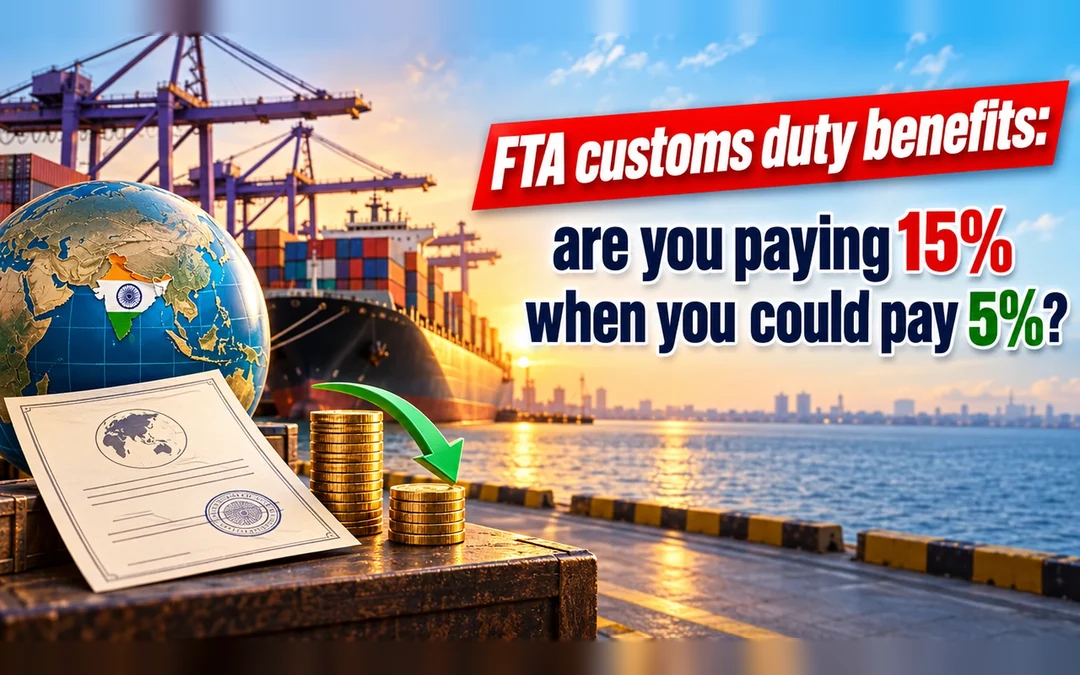
TL;DR: Free trade agreements (FTAs) can cut customs duty on eligible imports from a standard rate of 15% or 7.5% to 5% or even zero. To claim it, your goods must meet the agreement’s rules of origin, and you need the right origin documents at the time of import. Many FTAs also cover “bill-to-ship-to” deals, where the invoice comes from one country and the goods from another.
Most importers know their standard customs duty rate. Far fewer check whether they actually have to pay it.
If you import from a country that has a free trade agreement with India, the answer is often no. The duty on eligible goods can drop sharply, sometimes to zero.
Yet we regularly see importers paying the full rate on goods that would have qualified, simply because nobody asked the supplier for a certificate of origin.
Here’s how FTA customs duty benefits work, which agreements matter, what can go wrong, and how to claim.
How much can an FTA save on customs duty?
Short answer: It depends on the product and the agreement. An FTA gives a concessional duty rate, often 0% to 5%, on eligible goods from partner countries, in place of the standard rate. On a ₹1 crore import, the difference between 15% and 5% is ₹10 lakh of basic customs duty.
2 examples:
| Product | Origin | Standard rate | FTA rate |
|---|---|---|---|
| Diesel engines | Malaysia | 15% | 5% under the India-ASEAN FTA |
| Electric generators | ASEAN | 7.5% | 0% under the India-ASEAN FTA |
These rates are illustrations. Tariff rates change, often in the Budget, so check the current standard and FTA rate for your exact tariff line before you rely on them.
The saving also depends on getting the classification right. The FTA rate is tied to the tariff line, so a wrong HSN code can cost you the concession as well as the right standard rate. Our classification dispute guide covers how that goes wrong.
Which FTAs does India have?
India has a growing list of trade agreements. The ones importers use most include:
| Agreement | Status |
|---|---|
| India-ASEAN FTA | In force |
| India-Korea CEPA | In force |
| India-Japan CEPA | In force |
| India-UAE CEPA | In force since 1 May 2022 |
| India-EFTA TEPA (Switzerland, Norway, Iceland, Liechtenstein) | In force since 1 October 2025 |
| India-UK CETA | In force since 15 July 2026 |
| India-EU FTA | Negotiations concluded on 27 January 2026; not yet in force |
India has also been in trade talks with Canada.
Every new agreement is a chance to cut import costs, but only once it’s actually in force. A concluded deal still needs signature and ratification. Until then, the standard rate applies.
So the first question for any import is simple: does your supplier’s country have an FTA with India that’s in force today?
What else do FTAs give importers?
Lower duty is the headline. But FTAs carry other benefits that are easy to overlook:
- Zero or reduced customs duty on eligible goods
- Simpler, faster clearance procedures for goods that qualify
- Access to a wider supplier base, because partner-country suppliers become cheaper to buy from
- Clearly defined rules of origin, so you know in advance what qualifies
- A legal framework for resolving trade disputes between the partner countries
The second and fourth points matter more than they look. If you know the origin rules and have the documents in order, clearance tends to be smoother. If you don’t, an FTA claim can slow things down.
What are rules of origin, and why do they matter?
Short answer: Rules of origin decide whether goods genuinely “come from” the partner country and so qualify for the FTA rate. Under Section 28DA of the Customs Act and the CAROTAR Rules, 2020, the importer claiming the concession has to hold the origin information and be able to produce it if Customs asks.
This is where FTA claims go wrong.
Customs can ask for proof that the goods meet the origin criteria. If you can’t provide it, the concession can be denied and the duty difference demanded, with interest. In serious cases, there can be penalties too.
The department’s caution has a reason behind it. FTA rates create an incentive to route goods from non-partner countries through partner countries. So Customs checks origin closely, and the burden of proof sits with the importer.
What that means for you:
- Get the certificate of origin from your supplier before the goods ship.
- Understand the origin criteria for your product under that specific agreement.
- Keep the supporting information, so you can answer a verification request.
- Make the claim correctly in the bill of entry.
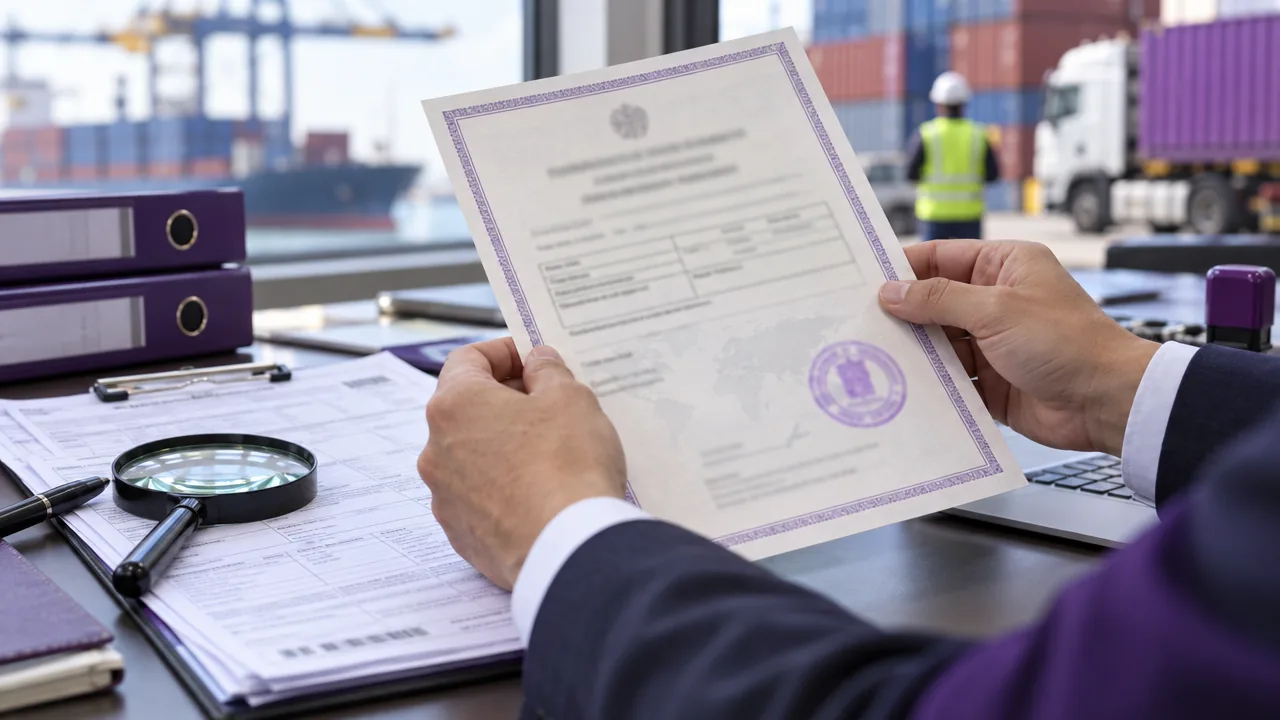
Can you claim FTA benefits if the invoice comes from a different country?
Short answer: Often, yes. Where the invoice is issued from one country and the goods are shipped from another (a “bill-to-ship-to” or third-country invoicing arrangement), many FTAs still allow the concession, as long as the goods meet the origin rules and the documents reflect the arrangement.
This comes up all the time. A regional head office in one country invoices you. The factory in a partner country ships the goods.
The goods may still qualify, because origin turns on where the goods were made. But each agreement handles third-country invoicing in its own way. Check the specific FTA’s provisions, and make sure the certificate of origin and invoice line up with how the deal actually works.
My view: this is one of the most commonly missed FTA savings. Importers see a non-partner country on the invoice and assume the concession is gone. Often it isn’t.
Can you claim FTA benefits after the goods are cleared?
Sometimes. If you’ve already paid the standard rate, you may be able to claim the FTA benefit retrospectively, through a refund claim under Section 27 of the Customs Act within 1 year of paying the duty.
That depends on whether the specific FTA allows it, so check the agreement before you file. Our customs duty savings guide covers the refund route in more detail.
But don’t treat this as plan A. A refund means paying the duty first, waiting for the money back and making a case for it. Getting the certificate of origin before shipment is far cheaper.
What should you do now?
Here’s the checklist we use with clients:
- List your imports. Note each product, its tariff line and its country of origin.
- Check FTA eligibility. Is there an FTA with that country in force, and does your product get a concessional rate under it?
- Check the origin rules. Will your goods meet them, and what proof will you need?
- Get the documents in place. Ask suppliers for certificates of origin, and agree a checklist with your customs broker so they arrive before shipment.
- Claim the duty savings on every eligible bill of entry, and review past imports for refunds where the FTA allows.
- Watch for new agreements. Check whether your supplier countries have an FTA with India that’s active or on the way.
For related topics, see our guides on anti-dumping duty vs safeguard duty, which can apply even to FTA imports.
Final word
If you import from an FTA partner and pay the standard rate, you’re probably overpaying. The gap between 15% and 5% adds up fast.
But FTA benefits aren’t automatic. You need the right agreement, the right tariff line, goods that meet the origin rules, and the documents to prove it, in hand before the goods arrive.
Start with your top 10 imports by value. For most businesses, that’s where the money is.
Want to know which of your imports qualify? Talk to us. Our import and export incentives review checks your imports against India’s FTAs and flags the savings you’re missing.
Author: Pradeep Reddy, CA, Founder, Unnathi Partners (formerly PwC and Deloitte)
Frequently asked questions
How do FTAs reduce customs duty in India?
They give a concessional duty rate, often 0% to 5%, on eligible goods from partner countries, in place of the standard rate. The goods must meet the agreement’s rules of origin.
Which FTAs does India have in force?
They include the India-ASEAN FTA, India-Korea and India-Japan CEPAs, India-UAE CEPA, India-EFTA TEPA (from 1 October 2025) and India-UK CETA (from 15 July 2026). The India-EU FTA was concluded in January 2026 but isn’t yet in force.
What do I need to claim an FTA concession?
A certificate of origin, goods that meet the origin rules, and the supporting origin information under the CAROTAR Rules, 2020, ready before the goods are cleared.
Can I claim FTA benefits if the invoice is from a non-partner country?
Often, yes. Many FTAs allow third-country invoicing, provided the goods meet the origin rules and the documents reflect the arrangement. Check the specific agreement.
Can I claim an FTA benefit after paying full duty?
Sometimes. Where the FTA allows it, you may file a refund claim under Section 27 of the Customs Act within 1 year of paying the duty.


We're a tax and regulatory consulting firm in Bangalore. We advise startups, MSMEs and large corporates on GST, Customs, FTP, Income Tax and FEMA, and we handle the litigation too.
Reviewed By

Handles GST and Customs advisory, compliance and notice responses. Also leads client deliverables on our Tax and Regulatory assignments.

CA with 12+ years in GST, Customs and FTP, a decade of it at PwC, Deloitte and Economic Laws Practice. Sits on KSCAA’s Indirect Tax Committee and teaches at NACIN. Speaks regularly at DGTS outreach programs.