 Chat on WhatsApp


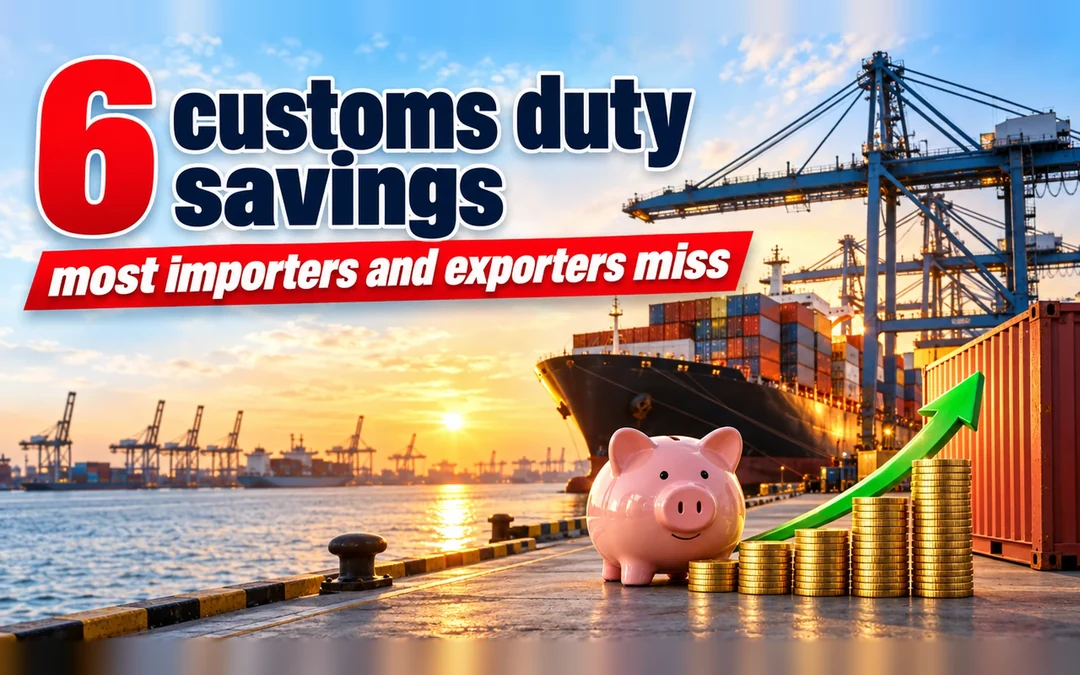
TL;DR: Most Indian importers and exporters overpay customs duty because a refund window closes, a scheme goes unclaimed or a deadline slips. The 6 savings we see missed most: wrong HSN codes, MOOWR not used, drawback realisation missed, EPCG’s anti-dumping duty gap, duty paid on rejected re-imports and FTA rates not claimed. Where you’ve already overpaid, Section 27 gives you 1 year to claim a refund.
Most of the overpaid customs duty we find in duty reviews was never demanded by the law.
It went out because nobody checked the tariff line on a bill of entry. Or because a scheme that would have deferred the duty wasn’t on anyone’s radar. Or because a certificate of origin arrived a week after the goods were done.
None of these are exotic problems. They show up across audits repeatedly, in businesses of every size.
Here are the 6-customs duty savings we see missed most often, what each one is worth, and what to do about it.
1. Are you paying duty under the right HSN code?
Incorrect classification is one of the most common and most expensive mistakes in customs. A wrong heading can mean paying a higher Basic Customs Duty (BCD) rate on every single shipment, for years.
Here’s a 1-hour check worth doing this month:
- Pull your last 5 bills of entry from ICEGATE.
- Check each HSN code against the Customs Tariff.
- See whether a concessional rate applies, under Notification No. 50/2017-Customs (which covers capital goods, project imports and specific sectors) or under an FTA: India-ASEAN, India-Korea CEPA, India-Japan CEPA or India-UAE CEPA.
Already paid too much?
Short answer: You can file a refund claim under Section 27 of the Customs Act, 1962, within 1 year from the date you paid the duty. Where the bill of entry was assessed at the higher rate, you’ll usually need to get that assessment modified first, by appeal or re-assessment, before the refund can be granted.
That second point catches people out. The Supreme Court held in ITC Ltd. v. CCE, Kolkata (2019) that a refund can’t be claimed against an assessment that still stands. So start early.
If the department disagrees with your heading, our guide to winning a classification dispute sets out how to build the case.
2. Should you use MOOWR to defer duty on capital goods?
If you’re setting up a manufacturing unit, paying BCD and IGST at the port on every machine ties up cash months before anything is produced.
MOOWR, the Manufacture and Other Operations in Warehouse (No. 2) Regulations, 2019 under Section 65 of the Customs Act, changes the timing. It lets you:
- Import capital goods and raw materials into a customs-bonded factory without paying duty upfront
- Manufacture there, in bond
- Pay duty only when finished goods, or the capital goods themselves, are cleared into the Indian market
- Pay nothing on goods you export, including capital goods exported later
How you apply has changed. Since 15 November 2025, the Section 58 warehouse licence and the Section 65 permission are filed together on ICEGATE 2.0 (Circular No. 28/2025-Customs).
One caveat. IGST stays deferred only because Section 65A of the Customs Act hasn’t been brought into force yet. Once it is, IGST will be payable at import on goods deposited after that date.
The full process is in our MOOWR setup guide. And MOOWR’s other big advantage comes up in point 4.

3. Have you realised export proceeds on goods where you claimed drawback?
Short answer: If you claimed Duty Drawback, the export proceeds have to be realised within the period FEMA allows, which is 9 months for goods. If they aren’t, and you can’t show evidence of realisation such as the e-BRC, Customs can recover the drawback with interest and start penalty proceedings.
Here’s what non-realisation costs you:
- Recovery of the entire drawback amount
- Interest, currently 15% a year
- Penalty proceedings under the Customs Act
Exporters tend to treat drawback as money already banked. It isn’t, until the proceeds come in.
The realisation clock itself now sits under the FEMA export and import regulations that took effect on 1 October 2026: 9 months for goods, 12 if the export is invoiced or settled in rupees. Our guide to the FEMA export and import regulations 2026 covers the detail.
4. Does EPCG cover anti-dumping duty?
Short answer: No. EPCG lets you import capital goods without paying BCD and IGST, against an export obligation. Anti-dumping duty isn’t covered, so if your machine attracts it, you pay it in full even under EPCG. MOOWR defers anti-dumping duty along with the rest.
Many importers assume EPCG wipes out every duty. It doesn’t, and the gap can be large on capital goods from countries facing anti-dumping duty.
Under MOOWR, anti-dumping duty is deferred like any other customs duty, until the goods are cleared into India. And if you export the capital goods at the end of their life, the anti-dumping duty never becomes payable.
So when does MOOWR make more sense than EPCG?
| Situation | Better fit |
|---|---|
| The capital goods attract anti-dumping duty | MOOWR |
| You’d rather defer duty than take a permanent exemption tied to an export obligation | MOOWR |
| You’ll comfortably meet an export obligation and the goods carry no anti-dumping duty | EPCG is worth comparing |
EPCG still has a place. The exemption is permanent if you meet the export obligation. But compare the 2 on your actual import list before you choose.
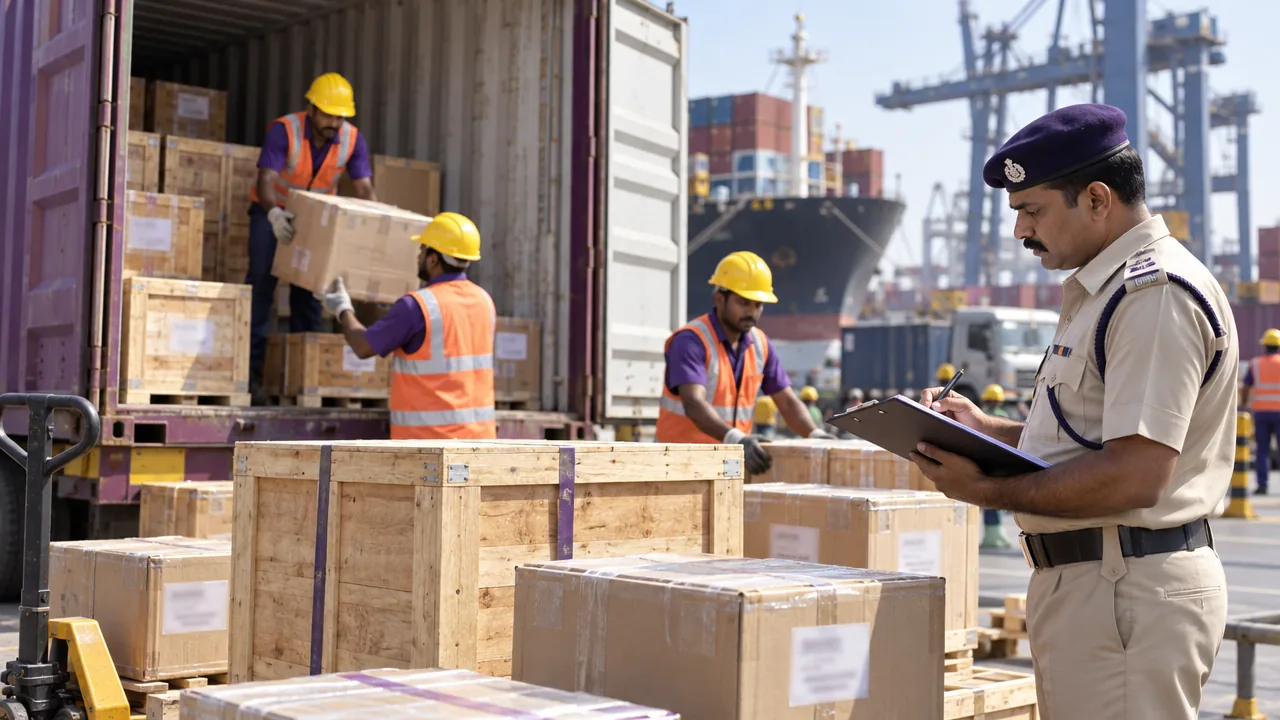
5. Can you bring rejected exports back without paying duty?
Short answer: Yes, under Notification No. 45/2017-Customs, if the goods come back within 3 years of export (extendable by up to 2 more years) and they’re the same goods you exported, without alteration abroad. Any export benefits you claimed, such as drawback, have to be paid back.
Buyers reject shipments. Goods fail inspection abroad. It happens, and many exporters then pay full import duty on their own goods coming home.
To re-import duty-free:
- File the bill of entry for re-import, citing Notification No. 45/2017-Customs.
- Make sure the shipping bill and the bill of entry are linked.
- Give Customs the rejection or return documents.
One caution. If the goods were repaired or altered abroad, and not just rejected, different rules apply. Duty may then be payable on the value of the repairs.
6. Are you claiming FTA rates, even after the fact?
If you’ve imported from ASEAN, Korea, Japan or the UAE without claiming the FTA’s concessional rate, you may have paid 5% to 15% more than you needed to.
The good news: you may be able to claim the FTA benefit retrospectively, through a Section 27 refund within 1 year of paying the duty. That depends on whether the specific FTA allows it, so check the agreement before you file.
For future imports, the fix is a process. Agree a checklist with your customs broker so the certificate of origin is in hand before the goods ship. Under the Customs (Administration of Rules of Origin under Trade Agreements) Rules, 2020, the importer has to hold the origin information when it claims the concession.
It’s the cheapest of the 6 savings to capture. All it needs is one document, obtained on time.
Final word
Every one of these 6 customs duty savings works under the law as it stands. Each one needs someone to check a tariff line, pick the right scheme, chase a payment, file a form or ask the supplier for a certificate.
My advice is to start with point 1. Pulling 5 bills of entry takes an hour, and it tells you quickly whether your classification and concessions are where they should be.
Every business has a different customs profile. What works for a manufacturer may not apply to a trader.
Want us to run a quick duty diagnostic? Talk to us with your IEC and a short note on what you import and export. We’ll flag the savings that apply to you. For related reading, see our SVB customs clearance process guide.
This article is for general information only and is not legal advice.
Author: Pradeep Reddy, CA, Founder, Unnathi Partners (formerly PwC and Deloitte)
Frequently asked questions
What is the time limit for a customs duty refund?
1 year from the date of payment of duty, under Section 27 of the Customs Act, 1962. If the bill of entry was assessed at the higher rate, you’ll usually need to get the assessment modified first.
How does MOOWR save customs duty?
It lets you import capital goods and raw materials into a bonded factory without paying duty upfront. You pay only when goods are cleared into India, and nothing on goods you export. Anti-dumping duty is deferred too.
Does EPCG cover anti-dumping duty?
No. EPCG exempts BCD and IGST against an export obligation, but anti-dumping duty is payable in full. MOOWR defers it.
EPCG or MOOWR: which is better?
It depends on your imports. EPCG gives a permanent exemption tied to an export obligation. MOOWR defers all duties, including anti-dumping duty, with no export obligation. MOOWR usually wins where anti-dumping duty applies.
Can I re-import rejected export goods duty-free?
Yes, under Notification No. 45/2017-Customs, within 3 years of export (extendable), if the goods haven’t been altered abroad. You’ll need to repay any export benefits claimed on them.


We're a tax and regulatory consulting firm in Bangalore. We advise startups, MSMEs and large corporates on GST, Customs, FTP, Income Tax and FEMA, and we handle the litigation too.
Reviewed By

Handles GST and Customs advisory, compliance and notice responses. Also leads client deliverables on our Tax and Regulatory assignments.

CA with 12+ years in GST, Customs and FTP, a decade of it at PwC, Deloitte and Economic Laws Practice. Sits on KSCAA’s Indirect Tax Committee and teaches at NACIN. Speaks regularly at DGTS outreach programs.