 Chat on WhatsApp


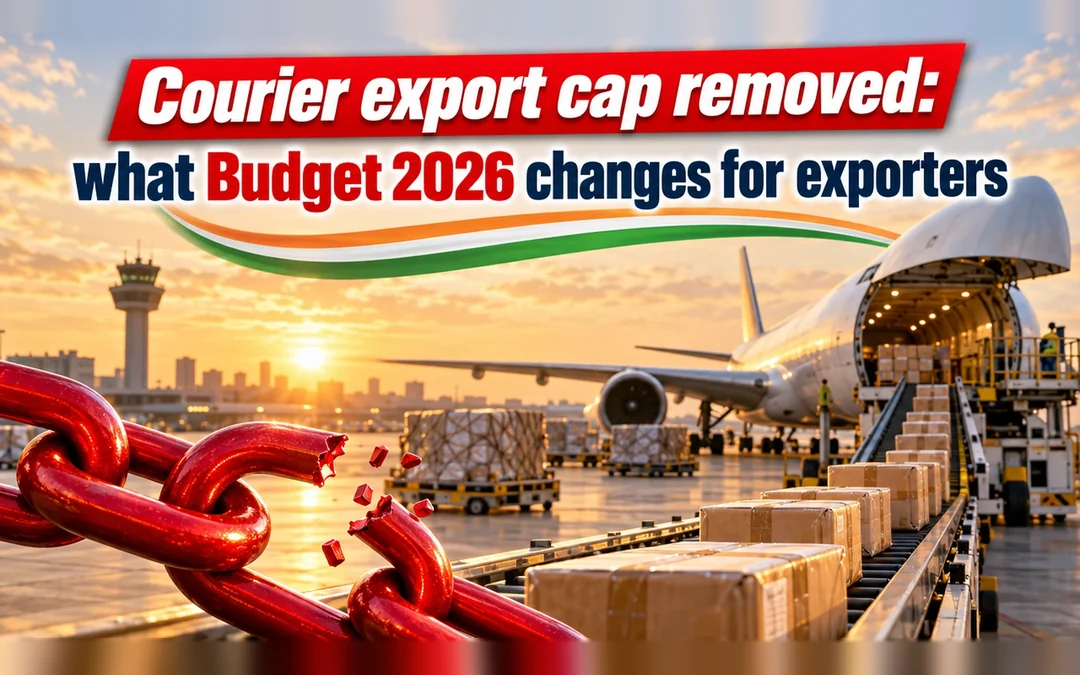
TL;DR: From 1 April 2026, CBIC has removed the ₹10 lakh per-consignment courier export cap announced in Budget 2026. You can now ship commercial goods of any value by courier without moving to air or sea cargo. A new Return to Origin facility and a risk-based process for returns come with it. FEMA realisation timelines and duty-benefit eligibility haven’t changed.
For years, one number shaped how many Indian exporters shipped: ₹10 lakh.
Go above it on a single consignment and the shipment had to leave the courier channel for air or sea cargo, with a heavier paper trail. That was held even when the courier was faster and cheaper for everything else about the order.
Budget 2026 removed the courier export cap entirely. CBIC put that into effect from 1 April 2026, along with new rules for courier goods that are returned or never claimed.
Below: What changed, what it means for duty benefits and FEMA, and what I’d check before you start shipping bigger consignments by courier.
What was the ₹10 lakh courier export cap?
Under the earlier Courier Imports and Exports Regulations, a commercial export consignment sent by courier couldn’t exceed ₹10 lakh in value. Anything above that went through conventional cargo, with its own shipping bill process.
For many smaller exporters, cargo also meant a steeper learning curve. So, the cap shaped behaviour is more than it shaped exports.
Here’s what we saw businesses do to stay under it:
- Split one large order into several consignments
- Raise multiple invoices for what was really one transaction
- Run more airway bills and label variations than the shipment needed
Average order values stayed low even when buyers wanted bigger orders. Courier was the fast, cheap channel. Cargo meant friction, so exporters bent the order to fit the channel.
What exactly changed from 1 April 2026?
Short answer: The ₹10 lakh cap on commercial courier exports has been removed completely, with no new ceiling in its place. CBIC amended the 2010 electronic declaration regulations by Notification No. 33/2026-Customs (N.T.) and the 1998 clearance regulations by Notification No. 34/2026-Customs (N.T.), effective 1 April 2026.
The 2 sets of regulations are the Courier Imports and Exports (Electronic Declaration and Processing) Regulations, 2010 and the Courier Imports and Exports (Clearance) Regulations, 1998. Circular No. 17/2026-Customs explains the operational detail.
The Finance Minister announced the change in the Budget 2026-27 speech on 1 February 2026. The Ministry of Finance confirmed it in a PIB press release on 31 March 2026.
The government has pitched this at MSMEs, artisans, and start-ups selling abroad through e-commerce. But the removal applies to commercial courier exports generally, with no sector or scheme condition.
That’s the right call, in my view. A value cap told you nothing about risk. It only told you which channel you were allowed to use.
How does the new Return to Origin facility work?
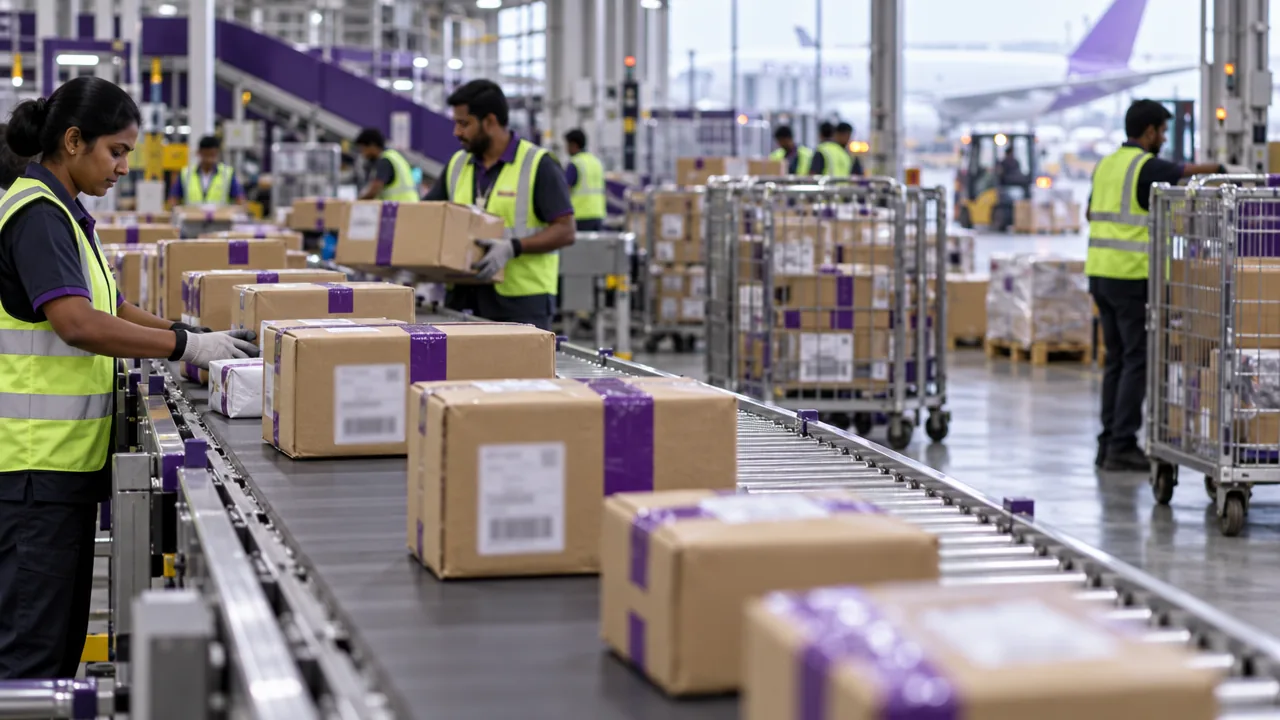
Short answer: Courier imports that stay uncleared or unclaimed at an International Courier Terminal for more than 15 days can now be sent back to origin through a simplified procedure. This applies only if the goods aren’t prohibited, restricted or under an enforcement hold.
Before this, such parcels could sit in the terminal indefinitely. That clogged terminals and left everyone in limbo: the sender, the courier and the department.
Return to Origin gives them a way out. For businesses, the practical point is simple. If an inbound parcel isn’t going to be cleared, you now have a defined exit route instead of an open-ended wait.
What changed for e-commerce returns coming back into India?
For returned or rejected goods coming back into India, including e-commerce returns, CBIC has dropped consignment-by-consignment checks in favour of a risk-based approach.
It did this through Notification No. 08/2026-Customs dated 30 March 2026, which amends the duty-exemption conditions in Notification No. 45/2017-Customs. A dedicated return module has also been built into the Express Cargo Clearance System (ECCS), the system that processes courier shipments.
The stated aim is to cut dwell time and transaction costs. That matters, because e-commerce exports come with a lot of returns.
There’s one confirmed exclusion, and jewellery exporters should note it. The risk-based approach doesn’t cover goods under sub-regulation (4) of regulation 2 of the 2010 Courier Regulations. That’s the category for jewellery and imitation jewellery sold and returned through the same e-commerce platform.
Those consignments stay under the older, stricter jewellery-specific re-import conditions. So if you’re in that trade, the new returns process won’t apply to you yet.
Can courier exports claim Duty Drawback, RoDTEP or RoSCTL?
Short answer: Yes, where the goods qualify. Since Notification No. 60/2024-Customs (N.T.) in September 2024, courier exports can claim Duty Drawback, RoDTEP and RoSCTL through the electronic integrated declaration on ICES. The cap removal adds no new benefits, but it removes the last value-based reason to avoid courier for these exports.
Until September 2024, ECCS couldn’t process Duty Drawback, RoDTEP or RoSCTL claims at all. So higher-value exports that relied on these incentives had a real reason to go by cargo.
That gap was fixed before this year’s change. Put the 2 changes together and the picture is clear: you can now ship a higher-value commercial consignment by courier and still claim these benefits, where the goods otherwise qualify.
Neither the cap nor the system limitation works against you anymore.
Does the change affect GST on exports?
No. The GST treatment of the export itself is untouched.
Exports remain zero-rated supplies. Your LUT or bond compliance stays as it was, and so does the documentation behind it.
What changed is the shipping channel available to you. What it costs you in GST, and what you have to file, is the same as before.
What should exporters check before shipping bigger consignments by courier?
The process is simpler now. But a bigger consignment raises the stakes on everything that sits underneath it. Here’s what I’d check first:
FEMA realisation.
Export proceeds still have to be realised in foreign exchange within the prescribed period, whatever the mode or value. A ₹10 lakh shipment and a ₹50 lakh shipment have the same deadline. The second is simply a much bigger amount to chase if the buyer pays late. Our guide to the FEMA export and import regulations 2026 covers the current timelines.
Duty-benefit eligibility.
Confirm that the product and the scheme actually qualify for Duty Drawback, RoDTEP or RoSCTL. Eligibility turns on the product and the scheme. Shipping mode doesn’t decide it.
Invoicing.
With splitting no longer needed, invoices should reflect the real transaction. Habits built around the old cap are worth unwinding now, before they confuse a reconciliation later.
Follow-up circulars.
The regulations only took effect on 1 April 2026. CBIC has said more system-driven changes to courier trade are part of this reform, so treat today’s position as a snapshot.

Is there a case for caution? I think so, at the margin. Courier clearance was built around smaller parcels, and the new framework is a few months old. For your first few large consignments, I’d budget a little extra time and keep the documents tighter than you would for a routine parcel.
For the wider duty picture on your shipments, see our guide on common customs duty savings.
Final word
Removing the ₹10 lakh courier export cap turns courier from a small-parcel channel into a real option for larger commercial exports. Paired with the 2024 change that opened Duty Drawback, RoDTEP and RoSCTL claims to courier shipments, it removes the 2 main reasons exporters used to avoid it.
The obligations underneath haven’t moved: FEMA realisation, GST documentation and scheme eligibility. Only the value ceiling and the returns process have.
So the work now is to make sure your bigger courier shipments are as well documented as the cargo shipments they replace.
Planning to send higher-value consignments by courier? Talk to us before the first one ships, and we’ll check your GST, FEMA and duty-benefit position. Our customs advisory services cover the rest.
This article is for general information only and is not legal advice.
Author: Pradeep Reddy, CA, Founder, Unnathi Partners (formerly PwC and Deloitte)
Frequently asked questions
Has the ₹10 lakh courier export cap been removed or just raised?
Removed completely. Notification Nos. 33/2026-Customs (N.T.) and 34/2026-Customs (N.T.) eliminate the value ceiling on commercial courier exports. There’s no replacement cap.
When does the removal of the courier export cap apply from?
From 1 April 2026, as explained in Circular No. 17/2026-Customs. The change was announced in the Budget 2026-27 speech on 1 February 2026.
Can I claim RoDTEP or Duty Drawback on courier exports?
Yes, where your goods and scheme qualify. Since Notification No. 60/2024-Customs (N.T.) in September 2024, courier exports can claim Duty Drawback, RoDTEP and RoSCTL through the electronic integrated declaration on ICES.
Does this change GST or FEMA compliance for exports?
No. GST zero-rating, LUT or bond compliance, and the FEMA deadline for realising export proceeds are all unchanged. Only the courier value ceiling and the returns process have changed.
What happens to courier imports that are never claimed?
If they’re uncleared or unclaimed for more than 15 days, and aren’t prohibited, restricted or under an enforcement hold, they can be sent back to origin through the simplified Return to Origin procedure.


We're a tax and regulatory consulting firm in Bangalore. We advise startups, MSMEs and large corporates on GST, Customs, FTP, Income Tax and FEMA, and we handle the litigation too.
Reviewed By

Handles GST and Customs advisory, compliance and notice responses. Also leads client deliverables on our Tax and Regulatory assignments.

CA with 12+ years in GST, Customs and FTP, a decade of it at PwC, Deloitte and Economic Laws Practice. Sits on KSCAA’s Indirect Tax Committee and teaches at NACIN. Speaks regularly at DGTS outreach programs.